Tiger Mazibuko
Heart of the HunterTiger Mazibuko is a captain in the Reaction Unit and the commander of Team Alpha, recruited by Janina Mentz from the Recces to help shape a unit whose purpose remains unsettled. His command combines practiced operational discipline with fierce loyalty to his people and a volatile sense of injustice. During the pursuit of Thobela Mpayipheli, that volatility becomes both a weapon and a vulnerability: Mazibuko threatens his opponent, but is eventually forced to consider whether the anger driving him is his own or something his superiors are using.
Identity and Recruitment
Mazibuko first appears striding across the Parachute Battalion parade ground with Little Joe Moroka one step behind him. The scene establishes their connection through the ease of their formation: Moroka follows Mazibuko, while Mazibuko is the one who identifies the person they have come to find. Later, Mazibuko’s recollection of an earlier dispute makes clear that this loyalty is not merely formal. He sees Moroka as a member of his own circle, someone whose dignity he feels responsible for defending.
Janina Mentz recruited Mazibuko out of the Recces when he was a one-pip lieutenant, dossier in hand. By the time he stands beneath the wing of the Condor with twelve men loading ammunition boxes, he has waited thirty-eight months for the operation in front of him. The interval and his promotion to captain place him within a unit still defining its purpose: his authority has grown, but the Reaction Unit has not yet accumulated the operational experience he expects its members to need.
Command, Loyalty, and the Reaction Unit
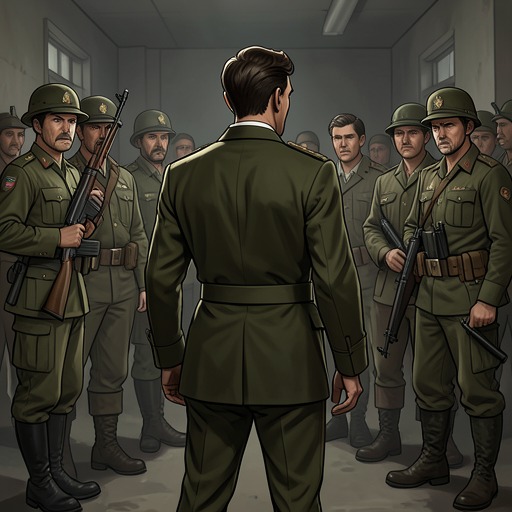
Mazibuko’s command style is visible in the care he gives both equipment and people. Before an operation, he checks the line of his team, correcting belts and straightening equipment after they hand him his jacket, weapons, night-sight headset, and camouflage paint. He gives the group a brash new name, Gangsta Busters, turning preparation into a display of team identity. His orders can be sharp and theatrical, but he is attentive to readiness and expects his men to act together.
His loyalty to Moroka also governs what he considers an acceptable response to an insult. After Moroka fails to salute a lieutenant, the officer sets a German Shepherd on him; the dog bites Moroka’s trousers, and the encounter leaves him humiliated. Mazibuko regards the episode as an injustice, not a harmless disciplinary exchange. He assaults the officer rather than use official channels, reasoning that others might otherwise take liberties with the Reaction Unit. The choice shows both his protective instinct and the danger of allowing personal anger to determine how he exercises command.
The team’s early operational experience sharpens his doubts about the unit’s role. After an action in which only Da Costa has been allowed to fire, the men joke that the black members of the elite unit were left watching while the colonials got to shoot. The others laugh, but Mazibuko does not. He tells Mentz that this is not what they trained for and asks for a proper challenge. His dissatisfaction is not simply a desire for action: he understands the Reaction Unit as something between a counter-terrorist force and a hostage-rescue team, yet its first real work has included a raid on a drug den and then a roadblock. After thirteen months of simulations and exercises, the gap between the unit’s ambitions and its assignments weighs on him.
The Manhunt and Its Pressures
At the roadblock in the Great Karoo, Mazibuko finds the operation badly matched to its purpose. The rain is heavy, visibility poor, and the available force too small to cover the alternatives open to a fugitive. He studies the traffic officer’s maps and identifies side roads toward Nelspoort and Wagenaarskraal that must also be watched. With too few vehicles, some Reaction Unit members must be dropped on foot to guard those routes in pairs. The arrangement leaves a motorcyclist with greater mobility than the men trying to stop him, and Mazibuko sees the plan as a fiasco rather than a sound deployment.
His frustration is sharpened by comparison with the resources he saw during four months at Quantico, Virginia. He imagines the FBI Hostage-Rescue Team equipped with four-wheel drives, armoured vehicles, and helicopters; his own operation depends on a bakkie, a Corolla, a frightened traffic officer, and limited personnel. In the storm he raises his fist and shouts, then turns back to the soldiers in the tent and gives them a calm order: he has to send them out. The contrast between his outburst and his controlled instruction shows the effort required to keep command functioning even when he believes the plan is failing.
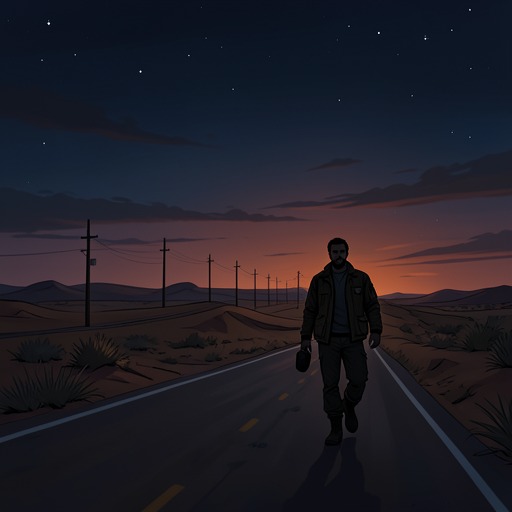
When Mpayipheli contacts the military frequency and identifies himself, Mazibuko’s exhaustion and frustration flare into a personal pursuit. The fugitive tells him that men west of the N1, near the Sneeukraal turn-off, need medical help, says the serious injury was accidental, and asks to avoid further confrontation. Mazibuko instead rushes to mobilize the helicopter and Team Alpha, taking weapons and spare magazines as he prepares to go after him. Yet Mpayipheli’s call produces more than anger: Mazibuko feels a sudden, almost welcome apprehension at the prospect of a worthy opponent. His response reveals how the manhunt gives the challenge he has demanded even as it draws him toward a conflict that can no longer be contained within professional duty.
Doubt, Accountability, and the Final Confrontation
The pursuit does not leave Mazibuko untouched by his own conduct. After the rain has eased, he gathers Team Alpha at the open door of the Oryx helicopter and apologizes to Moroka in front of the others. He admits that he wrongly berated him, that anger had got the better of him, and that the earlier fault was not Moroka’s. The apology does not erase the earlier abuse of authority, but it marks a rare moment in which Mazibuko names his own failure and addresses it before the team.
Later, unable to sleep on an army bed in Kimberley, he asks himself why he hates Mpayipheli. He recognizes that Mpayipheli served in the Struggle and did not betray his comrades. This recognition complicates the easy category of enemy: Mazibuko can acknowledge a shared history of service even while continuing to pursue the man. His feelings remain unsettled, and the knowledge does not immediately stop his threats or his pursuit.
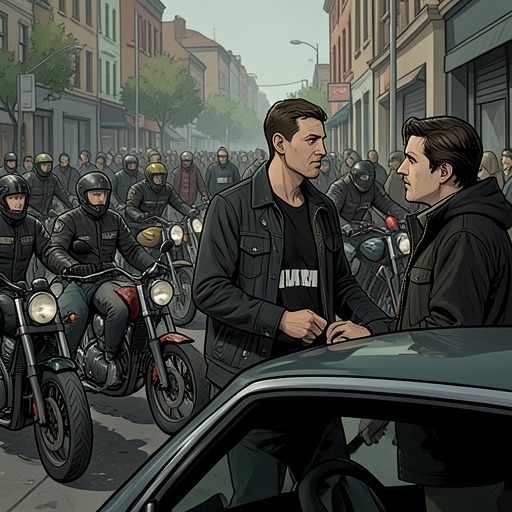
The conflict reaches its clearest personal test in a parking garage. Mpayipheli is waiting beside the motorcycle; Mazibuko approaches and vows that he will find and kill him once the data no longer matters. When Mpayipheli asks about Pakamile, the exchange exposes stakes beyond the hard disk and the official mission. Mpayipheli then challenges Mazibuko to consider whether anything remains beneath his anger and whether the authorities are using that anger as they would a piece of equipment. Mazibuko leans forward and reaches beneath his jacket toward his gun. Janina Mentz calls his nickname, while Mpayipheli warns that he is not alone; the threat of violence holds, but does not become an attack.
Mpayipheli repeats the warning not to let himself be used. Mazibuko drops his hand and falls silent. When Mentz asks where the hard disk is, he says it is safe, then asks where Pakamile is. The ending does not resolve his hostility toward Mpayipheli, and Mazibuko has already promised to pursue him later. It does, however, show him choosing not to draw his weapon in that moment. His final questions shift attention from vengeance to the missing boy, leaving open whether this pause can become a lasting change.
Narrative Role
Mazibuko serves as both the organized force pursuing Mpayipheli and a counterpoint to the fugitive’s refusal of further violence. His authority gives the manhunt its material shape—equipment, personnel, roadblocks, and helicopter deployments—while his anger exposes the human cost of treating a person as an operational target. The repeated conflict between disciplined command and personal rage culminates not in a victory over Mpayipheli, but in a moment of restraint. His response to the warning that he is being used leaves the pursuit’s moral conflict active even as his hand comes away from the gun.